The Federal Ministry of Research, Technology and Space has dedicated the 2026 Year of Science to the medicine of the future. As part of this initiative, GO-Bio initial held an online event on April 24, 2026 on the topic of "New medicines, personalised therapies and AI".
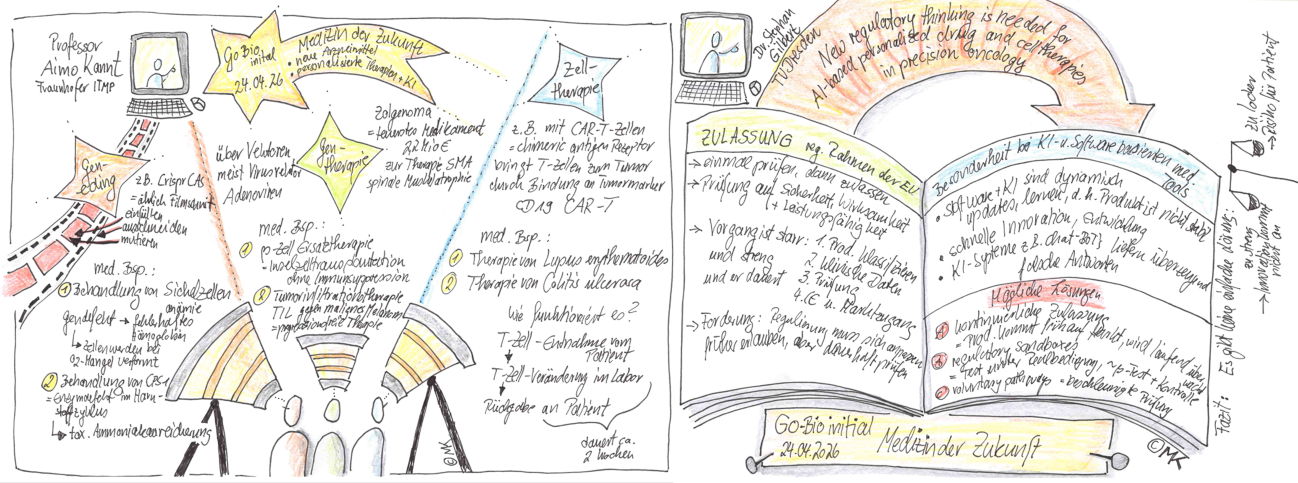
First, Prof. Aimo Kannt from the Fraunhofer Institute for Translational Medicine and Pharmacology ITMP provided an insight into innovative therapies such as gene editing, gene therapies and cell therapies. He discussed current approaches, the techniques used and the diseases being treated. He looked to the future to consider how personalised approaches might develop further. There is no shortage of ideas, opportunities and research approaches, according to Prof. Kannt, but economic considerations must also be taken into account. The participants asked about the situation regarding regulatory approval and funding by the healthcare system.
Dr Stephan Gilbert from TU Dresden then explored the issue of regulatory approval for AI- and software-based medical approaches in greater depth in the second presentation. He provided an insight into the tension between regulatory processes and the dynamic nature of AI- and software-based medical developments. In his view, the procedures at regulatory authorities need to be reformed so that innovative approaches can reach patients whilst still taking safety into account. He proposes a continuous authorisation process for AI and software-based approaches, whereby the product is brought to market early but is continuously monitored for safety, efficacy and performance. He also considers regulatory sandboxes – in which testing takes place under controlled real-world conditions, similar to a beta test – to be useful, because AI- and software-based medical developments are not static and unchangeable once approved, but rather are constantly evolving, i.e. changing and ‘learning’. His conclusion is that there are no simple solutions; rather, developers, regulatory authorities and healthcare systems must work together in a more networked manner.