On January 15, 2026, the GO-Bio initial seminar series kicks off with the follow-up event on storytelling with a workshop led by Bartosz Kajdas. This time, the focus will be on pitching to stakeholders, a particular challenge for scientists who are more accustomed to presenting their work to an expert audience with the relevant background knowledge. Now they need to be prepared for the all-important pitch to investors and decision-makers.
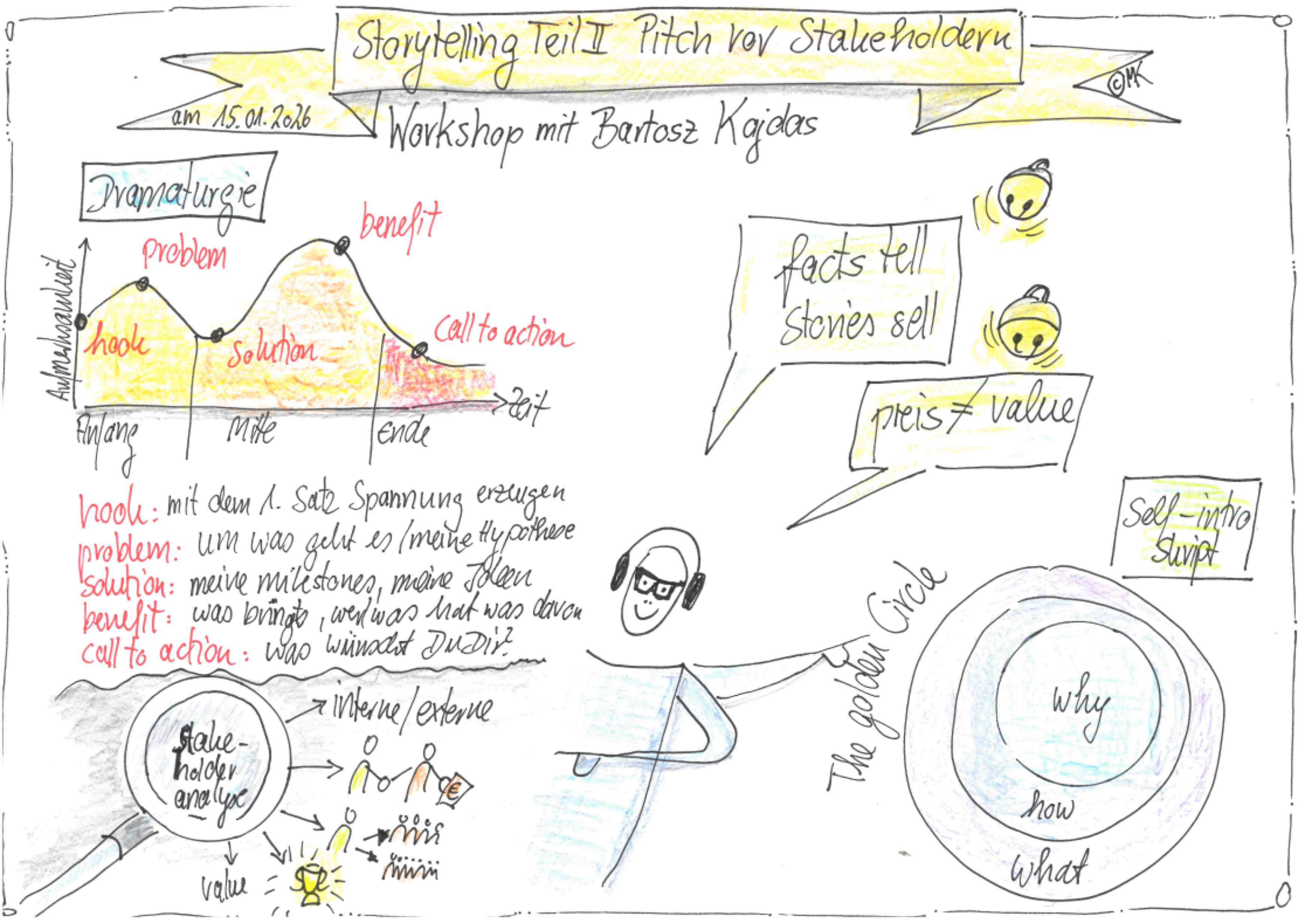
The TransMIT team was able to recruit none other than Bartosz Kajdas as a coach. He has been a well-known and established figure in the start-up scene for more than 10 years, not only through the publication of his book ‘Überzeugende Start-up-Pitches: Wie junge Gründer*innen jeden Wettbewerb gewinnen können’ (Convincing Start-up Pitches: How Young Founders Can Win Any Competition) and the podcast ‘Working with Start-ups from Science’. As a highly committed coach, he has been passionately and enthusiastically supporting more than 200 academic start-ups from a wide range of scientific disciplines since 2014, guiding them successfully through the start-up phase and pitch situations. Today, he shares his experience with us, true to the motto: facts tell, but stories sell.
Participating scientists learn first-hand how to really inspire stakeholders, i.e. investors and decision-makers, with their research results in pitch situations. Get out of your comfort zone: Analyse! Produce! Perform! With his APP method, Bartosz Kajdas introduces us to a technique that scientists can use to systematically increase their chances of a convincing and successful pitch. First, he outlines a universally applicable 5-point dramaturgy for the individual sections of a pitch and emphasises the importance of the very first sentence. ‘It has to be spot on, it has to inspire, the enthusiasm you have for your research has to come across right away,’ is his credo. This is then packaged into small, interesting challenges in the workshop and immediately put into practice in practical exercises. According to Bartosz, a stakeholder analysis is also very important, because by changing perspective to the role and position of the stakeholder in question, I learn about their motivations and what arguments they want, which values are relevant, and whether more scientific or more business-related details should be presented. His ideas, suggestions and proposals are enthusiastically received and immediately put into practice. The event ends with the Golden Circle, a self-intro script for a good start.