On November 25, 2025, GO-Bio initial devoted itself to the current developments in alternative methods to animal testing in an online event.
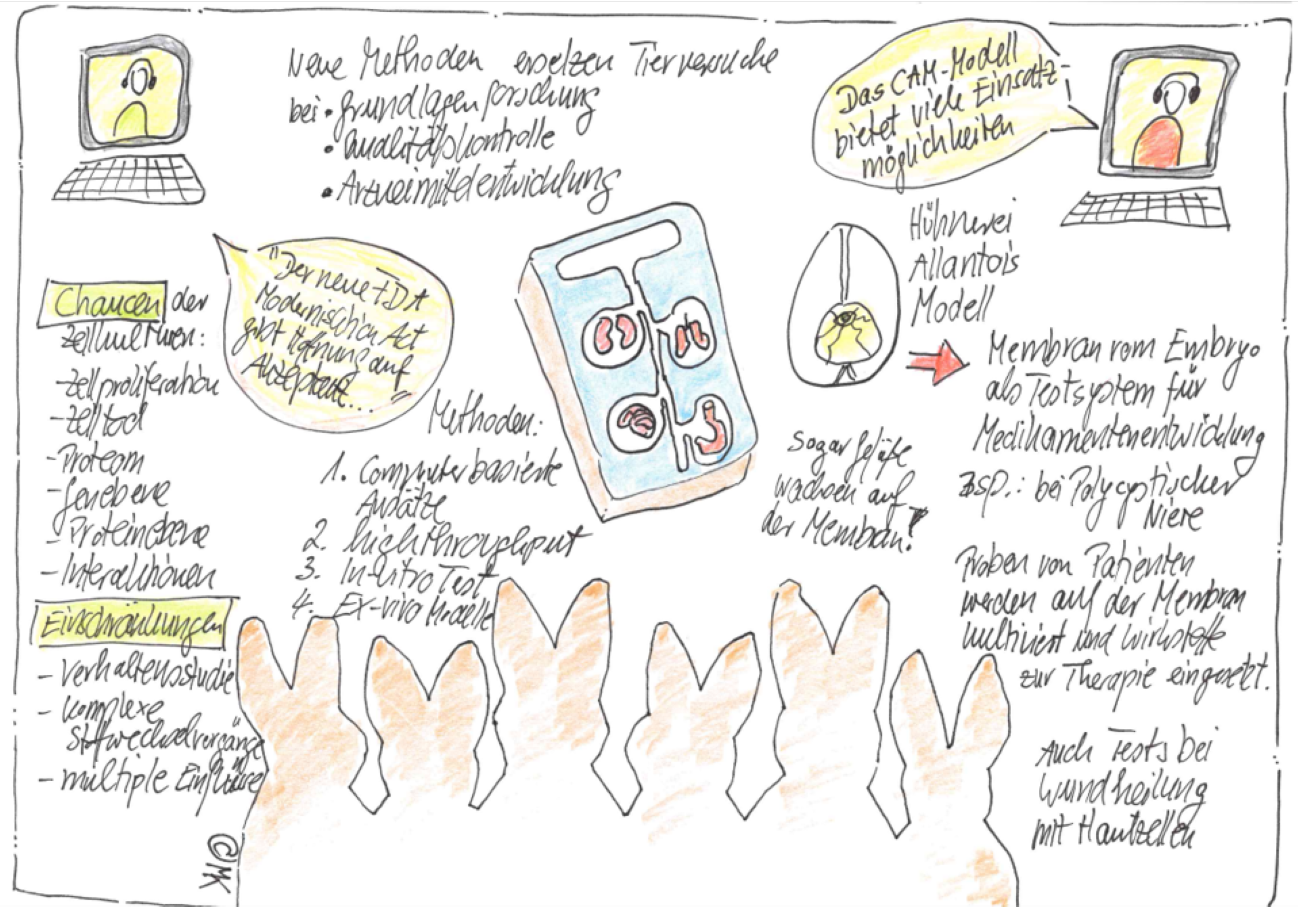
First, Prof. Dr. Härteis from the Institute for Cellular and Molecular Physiology at the University of Regensburg spoke about her experiences with the chorioallantoic membrane (CAM) as a 3R method in molecular medicine. The chorioallantoic membrane is an extraembryonic membrane in chicken eggs that is formed by the fusion of the chorion and allantois and serves as a lung and gas exchange membrane. A fertilised chicken egg is used to study biological processes such as tumour growth, angiogenesis (blood vessel formation), metastasis and drug effects by applying tumour cells or substances directly to the highly vascularised, extra-embryonic CAM. This is a practical example of animal-free, rapid and cost-effective analysis. Prof. Härteis presented results from her translational tumour and kidney research. She also addressed other research approaches in which skin cells are used for wound healing. At the end of her presentation, she answered questions on ethics and data protection, as well as on the use of blood vessels from CAM for medical training when learning how to suture blood vessels.
Prof. Dr. Bettina Seeger from the University of Veterinary Medicine Hannover then gave an overview of the diverse opportunities and possibilities offered by alternative methods to animal testing. She demonstrated how computer-based software can be used for structure prediction or prognosis of binding and toxicology. Her hope is that the new FDA Modernisation Act 3.0 will lead to greater acceptance of these methods in drug development, approval and quality control. In her opinion, however, there are limitations alongside the many advantages, e.g. with regard to behavioural studies, or when complex metabolic processes are considered or multiple influences are present. At the end of the well-attended online event, Prof. Seeger answered questions about the analysis of multi-substance mixtures, existing pain models, and skin and neuron models from her current research. She uses stem cell-derived models for neurotoxicology and infectiology.