What challenges are involved in setting up a start-up in the field of gene therapy/gene editing, and what specific regulatory considerations need to be taken into account? These questions and many others were explored at the GO-Bio initial seminar entitled ‘The DNA of the Development of Gene and Gene-Editing Therapies’.
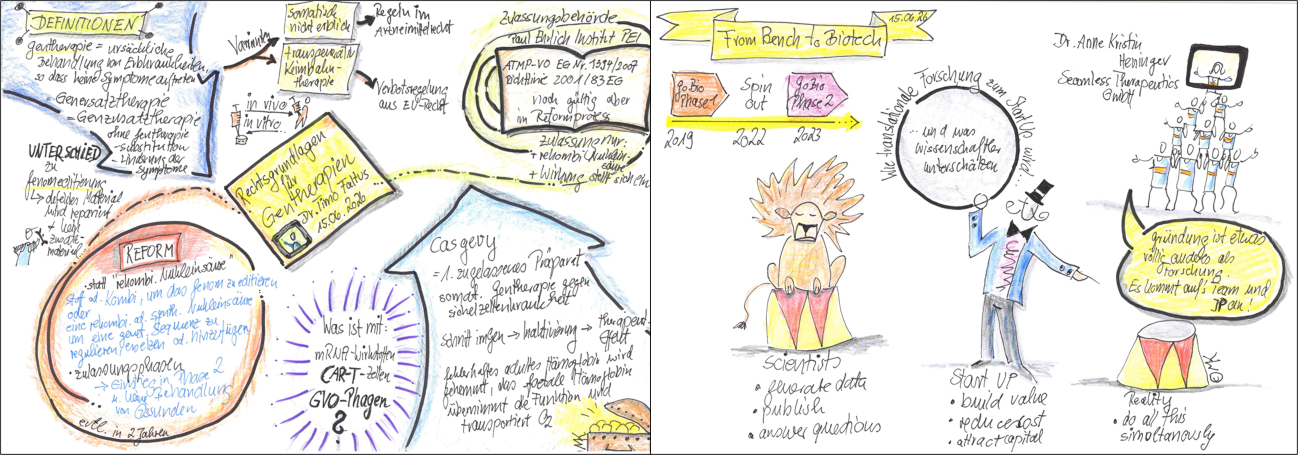
There are many questions surrounding the legal framework for the authorisation of gene therapy. For this reason, on 15 June 2026, Dr Timo Faltus from Martin Luther University Halle gave a talk on the topic ‘Gene Therapy – The Legal DNA of Gene Therapies from Research to Authorisation’ and, as part of GO-Bio initial, shared his wide-ranging experience in this field with the researchers. He has previously led an interdisciplinary research project on the ethical, legal and social issues surrounding genome editing and has even served as an expert on genetic engineering law for the German Bundestag. It was very important to him to explain how the terms ‘gene therapy’ and ‘genome editing’ differ from one another, where the gaps in the current legal framework lie, and how the planned reform will close existing gaps in the authorisation process, whilst at the same time leaving some questions unanswered. What about mRNA therapeutics, CAR-T cells and GMO phages? At the end of his presentation, Dr Faltus also introduced Casgevy, the world’s first approved gene therapy based on the CRISPR/Cas9 gene-editing system. Developed by Vertex Pharmaceuticals, it serves as a one-off, potentially curative treatment for severe forms of sickle cell disease and beta-thalassaemia.
In the second talk, ‘From Bench to Biotech – How Translational Research Becomes a Start-up’, Dr Anne-Kristin Heninger described her personal experiences in founding Seamless Therapeutics GmbH, a Dresden-based company active in the field of genome editing. She, too, successfully navigated Phases 1 and 2 of the GO-Bio initial programme from 2019 onwards, navigated regulatory requirements and legislation, built a team and established intellectual property (IP) rights. Today, she heads up the company’s operational management and was able to offer the scientists plenty of tips and suggestions. She encouraged them to set up a start-up, but also highlighted the challenges and the areas where researchers can easily underestimate the complexity of the ‘start-up’ process. “It really comes down to the team and IP,” she advised the scientists.